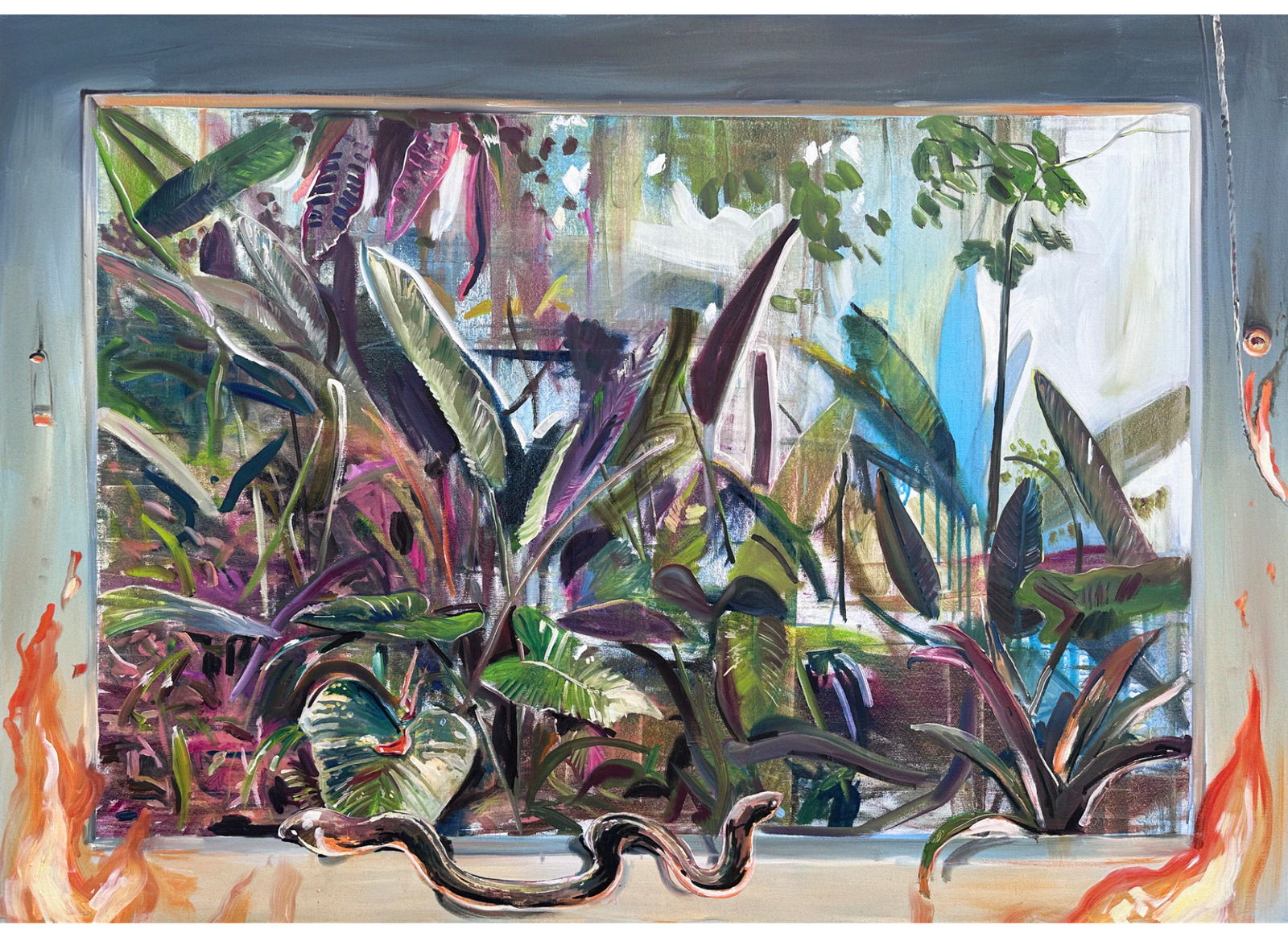
Opening: 19 November
20 November – 19 December
We are pleased to invite you to Salón Mexico, a group show of Modern and Contemporary Mexican artists to celebrate the first edition of Paraíso and to announce its second edition.
Salón México presents an exclusive selection of Mexican artists in collaboration with Panik.co and Acapulco62. Funds raise from Salón México will be shared with the Paraíso team who made its first edition possible.
Artists: Alfonso Mena, Carlos Amorales, Vicente Rojo, Mauricio Limón, Germán Venegas, Jan Hendrix, Pedro Reyes, Tania Candiani, Pablo Vargas Lugo, Miguel Ventura, Francisco Toledo, Dr Lakra and Marcos Castro.
Carlos Amorales (Mexico City, 1970)
In his work, Carlos Amorales is primarily interested in language and the impossibility/possibility of communicating through unrecognisable or uncodifiable forms, such as sounds, gestures and symbols. Amorales experiments at the boundaries between image and sign using a variety of media, including animation, video, film, drawing, installation, performance and sound. His practice is based on different forms of translation: instruments that transform into characters in his films, letters that become shapes, and narratives that turn into body language. The foundation for many of these explorations was Liquid Archive (Archivo Líquido), a project composed of shapes, lines and nodes created by the artist in 1998, on which he worked for over ten years. In addition to Liquid Archive, Amorales has developed other alphabets and systems to translate texts ranging from museum labels to short stories. Amorales’s works exist in an alternate world, parallel to our own, governed by its own rules and evolving as new works emerge.
Amorales studied in Amsterdam at the Rijksakademie van beeldende kunsten (1996–1997) and the Gerrit Rietveld Academie (1992–1995). He has completed artistic residencies at Atelier Calder in Saché, France (2012); at the Musée d’Art Contemporain du Val-de-Marne (MAC/VAL) in Vitry-sur-Seine, France (2011); and in the United States as part of the Smithsonian Artist Research Fellowship program in Washington, D.C. (2010).
Pablo Vargas Lugo (Mexico City, 1968)
Pablo Vargas Lugo studied Visual Arts at the Universidad Nacional Autónoma de México. Since 1991, his work has been exhibited in more than a hundred solo and group exhibitions. His practice has distilled a repertoire of resources that make images and references resonate across disparate registers, sparking humour, unease or wonder at the encounters brought about by these shifts. Throughout his work, a series of recurring interests, such as space technology, writing, the measurement of time, or the mimetic and deterrent patterns of certain insects, are connected through unusual technical, visual and conceptual alignments.
Notable exhibitions include Exceso Solar at the Museo de Arte e Historia de Guanajuato (2023), Acts of God in the Mexican Pavilion at the 58th Venice Biennale (2019), Atlas at the Museo Universitario del Chopo (2018), micromegas at the Museo Tamayo Arte Contemporáneo and Museo Amparo in Puebla (2014), Intemperie at the Museo Experimental el Eco in Mexico City (2012), Eclipses for Austin at the Blanton Museum of Art in Austin, Texas (2009), Contemporary Projects (with Gajin Fujita) at the Los Angeles County Museum of Art (2005), and Congo Bravo at the Museo Carrillo Gil in Mexico City (1998).
He also participated in the 12th Shanghai Biennale (2018), the 26th São Paulo Biennial (2004), the Cuenca Biennial (2004), the 5th Mercosul Biennial (2005) and the 3rd San Juan Poly/Graphic Triennial (2012).
He has been an Artist-in-Residence at the Smithsonian Tropical Research Institute (Gamboa, Panama, 2024), a Research Fellow and resident artist at IASPIS (Stockholm, 2001), and participated in the ISP (New York, 2000). He has received grants and production support from the Cisneros Fontanals Art Foundation (2015), Fundación Jumex (2017), Fundación BBVA Bancomer (2018) and the Sistema Nacional de Creadores of the National Fund for Culture and the Arts (FONCA).
His work is held in public collections including the Museum of Modern Art (New York), the Los Angeles County Museum of Art, the Blanton Museum of Art (Austin, Texas), the Museum of Fine Arts, Houston, the Museu d’Art Contemporani de Barcelona (MACBA), the Museo de Arte de Lima (MALI), the Museo Tamayo Arte Contemporáneo and the Museo Universitario Arte Contemporáneo (MUAC) in Mexico City, among others.
Tania Candiani (Mexico City, 1974)
Tania Candiani lives and works in Mexico City. One of the central interests of her work is the expanded notion of translation, extending into the experimental field through the use of visual, sound, textual and symbolic languages. Many of her projects consider the universe of sound and the politics of listening as tools capable of broadening and transforming both human and non-human perceptions. A fundamental part of her practice is tied to feminist politics and practices, understanding them as a community-based, affective and ritualistic experience.
Her work frequently involves interdisciplinary teams across various fields, weaving intersections between art, literature, music, architecture, science and labour, with a strong emphasis on ancestral knowledge, traditional techniques, technologies and their history in knowledge production.
She is a member of Mexico’s National System of Art Creators (Sistema Nacional de Creadores de Arte), a recipient of the Guggenheim Fellowship in Creative Arts, and a research fellow at the Smithsonian Institution. She has also been an artist-in-residence with the Arts at CERN program in Geneva, Switzerland. In 2015, she represented Mexico at the 56th Venice Biennale. Her work has been exhibited internationally in museums, institutions and independent spaces, and is included in major public and private collections.
Her monographic publications include Tania Candiani: Los ojos bajo la sombra (2023); Tania Candiani: Como el trazo, su sonido (2022); Habita Intervenido (2015); Possessing Nature (2015); and Cinco variaciones de circunstancias fónicas y una pausa (2014).
Pedro Reyes (Mexico City, 1972)
With a background in architecture, Pedro Reyes is one of Latin America’s most influential contemporary artists. His interdisciplinary practice encompasses sculpture, architecture, performance and social projects, blurring the boundaries between art and activism. Throughout his career, he has explored themes such as violence, politics, communication, urbanism and utopia, creating works that extend beyond exhibition to actively impact reality.
His practice combines a profound ethical consciousness with a powerful, accessible visual language, allowing him to connect with diverse international audiences while continuing to build a body of work that reconsiders the role of art in contemporary society.
Among his most acclaimed projects are Palas por Pistolas, a civic disarmament campaign that transformed weapons into gardening tools, and Sanatorium, a temporary clinic offering experimental psychological treatments.
He has exhibited at institutions including the Solomon R. Guggenheim Museum and the Museum of Modern Art in New York, the Walker Art Center, the Serpentine Gallery and Museo Jumex, among others. A recipient of the MacArthur Fellowship (often referred to as the “genius grant”), he was also the first Mexican artist to receive the Design Miami/ Visionary Award.
He is represented in London and Los Angeles by Lisson Gallery, in São Paulo by Galeria Luisa Strina, and in Mexico City by LABOR.
Jan Hendrix (Nuth, Netherlands, 1949)
Deeply rooted in the observation of landscape, Hendrix’s work has become a key reference point in contemporary art both in Mexico and internationally. His practice encompasses drawing, printmaking, sculpture, video and publishing, articulating an acute perspective on nature as structure, memory and metaphor. Based in Mexico since the late 1970s, Hendrix has developed a visual language of extraordinary formal power and technical precision, characterised by his studies of light, scale and organic pattern. His work explores the relationship between art, science and architecture, materialising both as museum pieces and as monumental architectural interventions in public spaces and landmark buildings.
His work is included in major collections across the Americas and Europe, and has been exhibited at leading museums and institutions such as the Museo de Arte Moderno (MAM) and MUAC in Mexico City, Museo Amparo in Puebla, the Bibliothèque Nationale de France in Paris and the Bonnefantenmuseum in the Netherlands. He has also collaborated with writers including Gabriel García Márquez, Seamus Heaney and Alberto Ruy Sánchez, consolidating one of the most distinctive trajectories at the intersection of image and word.
With each new body of work, he continues to push the boundaries of contemporary printmaking through an approach that combines technical mastery, ecological sensitivity and a deeply humanistic vision of our environment.
Mauricio Limón de León is a multifaceted artist whose work deploys a diversity of media and critical approaches that examine the intricate fabrics of identity, politics, culture and humour within contemporary art.
His artistic practice, encompassing sculpture, printmaking, photography, performance, video and painting, is characterised by its ability to integrate and confront diverse discourses and aesthetics, generating reflective and critical spaces that invite contemplation, often employing satire as a tool.
His research also extends into the realms of ethnology, urbanity, sexuality and power dynamics, explored through collaborative investigation rooted in psychoanalysis. This long-term commitment to individuals on the margins of society, people who navigate their existence outside conventional norms, has been a rich source of inspiration. Limón de León is drawn to the resilience, creativity and knowledge cultivated by these communities, which in turn deeply influence his artistic process.
Mauricio Limón de León is an alumnus of the Rijksakademie van beeldende kunsten, Amsterdam (2016–2017 cohort). He has been a finalist for the Victor Pinchuk Foundation’s Future Generation Art Prize, as well as a recipient of the FONCA Young Creators grant and the Pollock-Krasner Foundation annual grant. He has held artist residencies at the Fondation Fiminco, Paris; Cité Internationale des Arts, Paris; Casa Wabi, Puerto Escondido; and Casa Gallina, Mexico City.
Francisco Toledo (Juchitán, Oaxaca 1940–2019)
Francisco Toledo was a Mexican painter, printmaker, sculptor, ceramist and cultural promoter whose multidisciplinary work established him as one of the most prominent and influential figures in contemporary Latin American art. Born in Juchitán, Oaxaca, he began his artistic training at the Escuela de Bellas Artes in Oaxaca and the Escuela de Diseño y Artesanías (INBA) in Mexico City before living in Paris from 1960 to 1965, where he refined his printmaking techniques at Stanley William Hayter’s Atelier 17 and absorbed European avant-garde movements. His visual language incorporates a rich zoomorphic imagery, featuring frogs, iguanas, bats, insects and monkeys, that blends Zapotec mythology, universal literature and a mystical eroticism with unorthodox materials such as sand, amate paper, mica and natural fibres. Beyond his studio practice, Toledo was an ardent defender of Mexico’s biocultural heritage and founded seminal cultural institutions in Oaxaca, including the Instituto de Artes Gráficas de Oaxaca (IAGO), the Manuel Álvarez Bravo Photographic Center (CFMAB) and the San Agustín Arts Center (CaSa). His works are held in major public collections worldwide, including the Museum of Modern Art (MoMA) and the Metropolitan Museum of Art in New York, the Tate Modern in London and the Museo de Arte Moderno in Mexico City.
Vicente Rojo (Barcelona, 1932–2021)
Vicente Rojo was a Spanish-born Mexican painter, sculptor, graphic designer and editor whose work was central to the modern visual culture and abstract art movements in Mexico. Born in Barcelona, Catalonia, Spain, he studied sculpture and ceramics before emigrating to Mexico City in 1949 as part of the Spanish Republican exile, where he furthered his artistic training at the Escuela Nacional de Pintura, Escultura y Grabado “La Esmeralda”. A key member of the Generación de la Ruptura, Rojo developed a rigorous geometric and serial approach to painting and sculpture, organising his career around long-term series such as Señales, Negaciones, Recuerdos, México bajo la lluvia and Escenarios. Beyond his visual art practice, he transformed Mexican editorial design through his founding work with Imprenta Madero, La Jornada and Editorial Era, where he designed iconic book covers, including the original edition of Gabriel García Márquez’s Cien años de soledad. His work is represented in major public and private collections, including the Museo de Arte Moderno and the Museo Tamayo in Mexico City, as well as international institutions across Latin America and Europe.
Alfonso Mena (Mexico City, 1961)
Mena’s abstraction has been recognised in collective exhibitions, biennials and fairs in Mexico and abroad that have earned him prizes and scholarships. Highlights of his exhibitions include shows at the Kido Gallery in Japan, Galerie Espacio in Switzerland, the Palacio de Bellas Artes and the Museo de Arte Moderno (MAM) in Mexico City. His work is included in collections such as the Museo de Arte Contemporáneo (MARCO) in Monterrey, the Jumex Collection and the Museo de Arte Carrillo Gil.
Miguel Ventura (San Antonio, Texas, 1954)
Miguel Ventura has lived and worked in Mexico City since 1977. He has developed a body of work creating a new world with its own races and languages: NILC (New Inter-Territorial Language Committee). His atypical social model is presented through a series of video installations, objects, music, paintings and drawings, employing parody and ridicule to label everyday patterns of societal behaviour. His earlier work referred to notions of innocence, sexuality and masculinity. In recent years, Ventura has reinterpreted symbols of the past, such as the swastika, to discuss current practices in the neoliberal world of finance, government and art. His solo exhibitions include Oratorio de Arte Contemporáneo Neoliberal at the Museum of the City of Querétaro (2011); Cantos Cívicos, un proyecto de NILC en colaboración con Miguel Ventura at the Museo Universitario Arte Contemporáneo (MUAC), Mexico City (2008), and at the Espai d’art contemporani de Castelló, Castellón, Spain (2007); ¿Cómo he amarte, mi pequeñín? at El Ojo Atómico, Madrid (2005); The P.M.S. Dilemma at the Museo de Arte Carrillo Gil, Mexico City (2002); and The New Fuck Me Little Daddy House at the Museum of Mexico City, Flatland Gallery, and Impakt Festival in Utrecht (1999). He has also participated in various group exhibitions in America and Europe. Ventura is currently writing a novel away from the noise of the art world.
Germán Venegas (La Magdalena Tlatlauquitepec, Puebla, 1959)
From 1977 to 1982, Germán Venegas studied at La Esmeralda (National School of Painting, Sculpture and Printmaking), and he presented his first solo exhibition in 1984. Shortly before his formal training as an artist, he worked as a craftsman carver. He is widely recognised as one of the most outstanding representatives of the generation of artists who broke onto the national cultural scene with great force in the eighties, known as the Neomexicanistas; in many of his early works he combined wood carving and painting. After an extended period devoted to sculpture, Venegas returned to painting, finding a new point of departure in the philosophical-religious universe, where Buddhism provided a link between his life and his art and enriched his work with a new perception of life and death, represented in his paintings and drawings of Eastern and Western deities and icons. He received the acquisition award at the III National Meeting of Young Artists in 1983 and was a FONCA fellow four times, in two different categories (2000, 2001, 2004 and 2010), among other distinctions. His work has been exhibited in Mexico and abroad (USA, Japan, Spain, Guatemala, Brazil, Germany, Ecuador, Australia, Cuba, Italy and France), and is held in important collections including the Museo de Arte de Ponce in Puerto Rico, the Museo de Arte Moderno in Mexico City, the Metropolitan Museum of Art in New York and the Museo Extremeño e Iberoamericano de Arte Contemporáneo in Badajoz, Spain, among others.
Marcos Castro (Mexico City, 1981)
Marcos Castro’s practice is strongly marked by a style that comes from the graphic and muralist tradition of his country, in which the influences of neo-expressionism and Neo-Mexicanism also stand out, as well as a gothic or punk contemporary aesthetic. Within his practice, the artist has developed a personal symbolic language articulated around several constants, such as an animalistic imaginary also composed of hybrid beings, and above all a constant re-reading of the Mexican founding myths. By deconstructing patriotic symbols or reinterpreting diverse historical events, from pre-Hispanic history to the 1968 movement, Castro conveys a personal vision of his contemporaneity, of his own historical and cultural moment, and at the same time incites the viewer to question the official historical and nationalist discourses.
Castro’s work reveals a fragmented and incomplete Mexican identity, from which he takes a multitude of symbolic elements and aesthetic codes to construct a new narrative, a kind of personal mythology in which all Mexicans recognise themselves by sharing the same context. The artist positions himself as a witness of his time and even as the bearer of the revolutionary torch, that of a revolution of thought that forces us to question the established order and the most deeply rooted myths.
As an artist, Castro has also co-directed Obrera Centro, a space in Mexico City, since 2010. It emerged with the aim of generating a site open to encouraging production, criticism and multidisciplinary artistic experimentation among colleagues.
For press and information contact: Javier@somersgallery.com